Friday, 19 June 2015

Final Exams...a tradition worth questioning


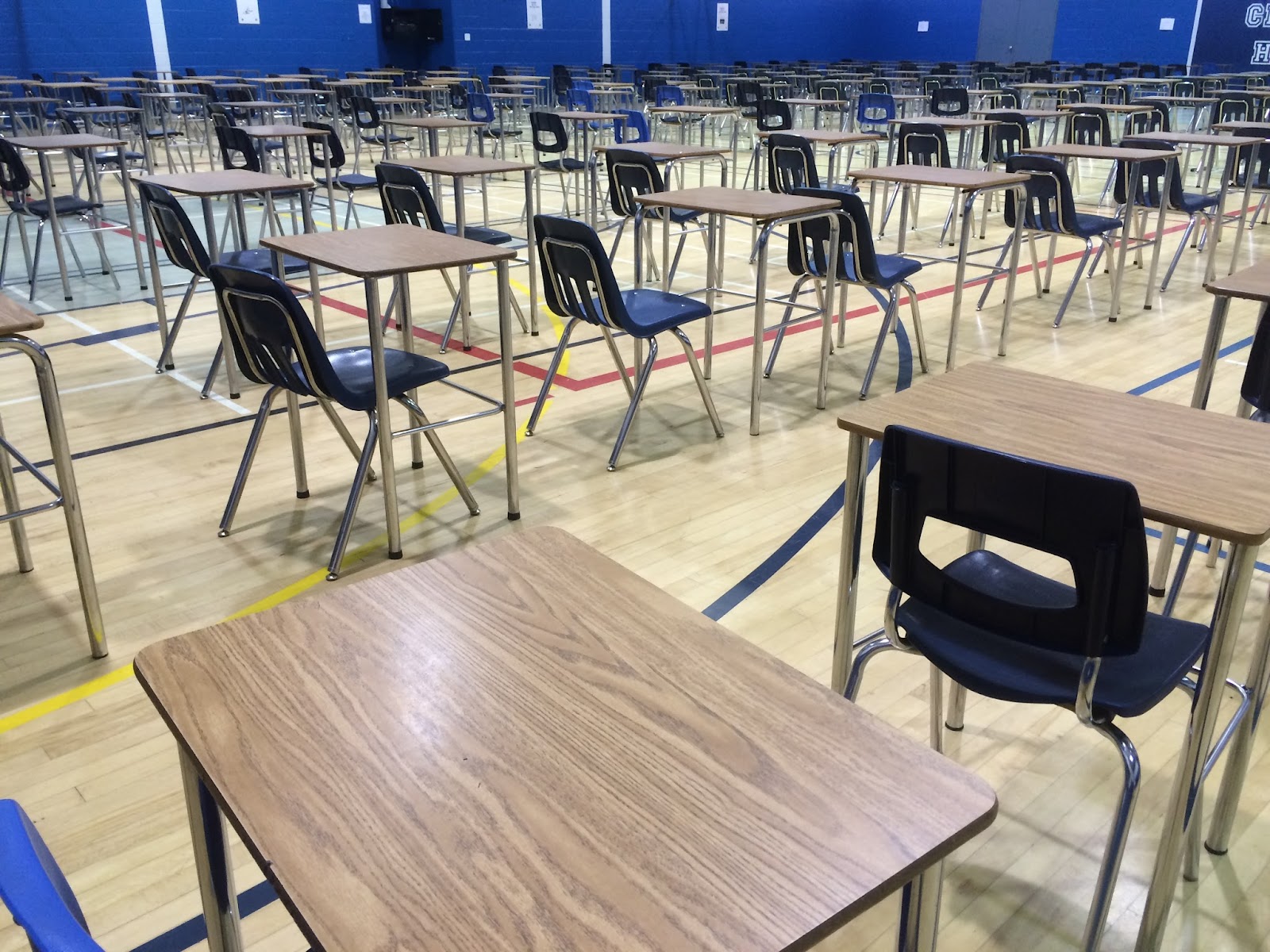
I have been having many conversations this year with teachers about our practice of administering final exams for students. Although I cannot confirm with certainty, I recently read that the final exam process has been happening since the 1830s. With all the current research on effective assessment, how students learn and knowing that we are required to make decisions that have a student's best interest as the primary consideration, I have to question why we are still doing this, this way. What is the purpose of a final exam and is it the best way to achieve that purpose?  Many people indicate that a final is a way for teachers to measure whether or not a student has learned what has been taught in the classroom, some indicate its how universities do it so we should too and others sometime claim it prepares them for the “real world.”

I watched a teacher work with a student the other day. She was watching him explain to another student how to do a math calculation. Through this process the student was truly able to demonstrate what he knew. Her biggest fear for this student will be when he is required to write a timed high stakes test with a hundred other students in an extremely structured setting. What approach seems to be more reliable and really indicative of what the student knows?

At random I chose two well known universities, Harvard and Berkley, and googled their final exam procedures. At Harvard only 259 of the 1,137 classes offered finals. Furthermore, it is expected that unless the professor declares early in the semester and notifies the Office of the Registrar that they plan on having a seated final exam they will not have one. Berkley communicates that oftentimes the alternatives (to final exams) may even be advantageous to promote student learning and be a more authentic means of students demonstrating what they have learned.  Surely if these two institutions have changed  we must question this approach in our schools. Even if universities are not changing their final exam procedures, is poor practices by other institutions really an excuse and reason for us to do the same?

As for real world application, other than school and my driver license I can’t remember writing a high stakes exam to demonstrate what I know. Not that long ago I was held accountable to my colleagues and had to demonstrate what I knew regarding a leadership approach. This was not done by sitting in  a room for two or more hours writing a multiple choice exam that would determine whether or not I  could continue as a school administrator. I worked with partners and presented to an audience.
I understand that there are limitations and perhaps different subjects require different approaches, but continuing to do the same thing the same way, just because it's how it's been done decades or perhaps even a century ago seems to be unfair and outdated.
IMG_6229.JPG

New School Design to Support Today's Learners

It’s not that often that a smaller city gets to build a new school so when the Superintendent put out a call for people interested in providing input for the design of it I leapt at the opportunity. The district that I work in will be building a new school that will serve 600 students from K to grade six. I had no idea what to expect as I entered the meeting room along with approximately 20 other educators and professionals including:  teachers, central office staff, school administrators and architects. Being the only administrator from a high school I was a little uncertain at first if I was in  a position to offer much in the conversations. What I soon discovered, however, is  that regardless of grade level, good philosophical and pedagogical ideas in education transcend age and grade levels. To be certain there are many differences between a high school and an elementary school, but the “big” ideas are aligned regardless of whether you are talking elementary or high school.
The process began with our Ministerial Order on learning. In groups we were asked to pull out pieces that resonated with us when deciding how a new school could  support the Order. It quickly became clear that student centered, flexible, inquiry based opportunities were a priority. A building that supported technology necessary. We also noted the movement towards a greater emphasis on competencies and less on content and meeting the needs of a variety learning styles.
From there we were asked to create a visual metaphor representing what the school would look like. We were asked, what would teachers or community members see when they came into the building that support our beliefs on what learning looks like ? The commonality with all the groups was not unnoticed. Themes of collaborative, flexible and fluid learning environments with the ability for students to pursue their interests and inquiry were prominent. A school that is welcoming and supports 21st century learning skills emphasized.
An architect team then gave a presentation that included the history of schools. They educated us on how the structure of schools have evolved and in some ways impeded research proven ways to enhance learning. The schools that once relied on tall windows that opened along with high ceilings for natural light and fresh air circulation have been modified and distorted as society felt the need to control the environment. The team also shared the policies and guidelines they are responsible for, but also how flexible space can be. The total square footage is locked, but how it is used can be manipulated.
Armed with information and beliefs we were then able to start listing physical suggestions to the building. Ideas such as glassed-in breakout rooms so that students could be supervised while they work in small groups or independently, garage door type doors in the gym that could be opened so the space could spill out into a large welcoming entryway foyer, outside walls constructed so that they could help with outdoor classroom space, a learning commons that is a focal point and easily accessible, natural lighting, spaces to create, inquire and explore, flexible walls….I think our group probably came up with over fifty suggestions. Architects sat at each table and continuously wrote notes, asked questions for clarifications, offered suggestions and informed us of constraints.

Five hours went by very quickly. We still have much work to do, but what inspired and gratified me as I left the first meeting was how I truly felt a part of the process and how everyone at the table was putting the best interest of the child into every consideration.

I  welcome any comments or ideas from others who have experienced or have ideas on how they feel a new school environment should support student learning.

Tuesday, 9 June 2015

Why Guy

I will change roles next year. I will now be responsible for the school’s Middle School (grades seven and eight). The other day I went around talking to each Middle School teacher sharing a little bit about myself, my beliefs and some initial thoughts on my vision of where I see our school going. I prepared every teacher for the fact that I will be continually asking “why?” and I invite and encourage them to do the same of me. It  is not that I necessarily believe we are doing something wrong, but I will always want to know the purpose and challenge if there are other more effective methods to reach the goal of doing what is best for students.


As I sat with a couple of young teachers, I noticed a stack of traditional final exams, all the same, photocopied and ready to be handed out to grade seven students for a timed test. I asked why? What ensued was a great conversation. No one in the room truly felt that these final exams were the best way for students to demonstrate what they have learned, so why are we still doing it?


I confessed that I have many whys. Why do we still have parent-teacher conferences that often don't even involve the student?  Why do we celebrate academic achievement in such way that honours only those who have reached a certain percentage and a way that ranks students? Why do we make decisions without consulting students?

What’s your why question?

Thursday, 4 June 2015

superstars

It's that time of year when my thoughts not only start to think about next year, but also reflect on the previous ten months. Because I’m always looking at how to improve my school, how to offer better opportunities for my students, how to implement change, I recently spent some time reflecting on how to best accomplish change and innovation. The answer, I believe, is in recognizing and utilizing our best teachers.


I think that Todd Whitaker does an excellent job of expressing the importance of our “super star” teachers. Too often we neglect them. We worry and wonder what the “nay sayers” may think or express.  Todd tells us that this thinking is wrong and I have to agree with him. He has lots of good advice in his book What Great Principals Do Differently, but the three things that are currently resonating in my head are:


  1. Start with your superstars when implementing change
  2. People, not programs make the difference
  3. Base every decision on your best teachers.


Todd also communicates that these invaluable people may be the first to leave if not acknowledged and listened to. The complainers will stick around and continue to do what they do, but if we (leaders) do not provide the enrichment for our elite just as a classroom teacher should do for their “gifted” then they will take the initiative and go elsewhere. For me that would be tragic.

Jim Collins in Good to Great informs us that that verbal praise is an extremely effective method of ensuring our superstars know they are valued. He also tells us that Great vision without great people is irrelevant. I am very fortunate that I have several superstars that I surround myself with every day. I am very guilty, however, of not letting them know how much I appreciate and depend on them. I think I better go have some conversations.

Wednesday, 27 May 2015

Exciting Times in Education


There are so many great things happening in education right now. What I have been reflecting on and appreciating recently are the priorities of student-centered education and pursuing a deeper level of understanding. In Alberta our Ministerial Order on Student Learning informs us that all decisions regarding a child's education must have their best interest as the primary consideration. Inquiry and discovery are emphasized and technology to support learning is nonnegotiable. Taking risks is encouraged.

Walls are beginning to be torn down. Conversations around authentic, meaningful assessment, eliminating traditional final exams, providing a time for students  to take ownership of their learning, to inquire, to explore, to create and to tinker through  methods including PBL, makerspaces, genius hour, flex time the new Career Technology Foundations (CTF) program are creeping into daily discussions.

Educators are taking ownership of their learning too. Teachers are directing, initiating and driving their own professional development:  ed camps/unconferences, empowering teacher learners, administrators shifting focus to creating a culture of learners. All good stuff.


I’ll admit there are days when my head starts to spin and I need to take a step back and regroup and wonder if I can keep up, but then a colleague pushes my thinking, questions the “why,” forwards me another tweet, blog, article or invites me to come and see something new and innovative in their classroom and I’m reminded of how exciting things are in education right now and how incredibly fortunate I am to be doing what I'm doing. 

Monday, 11 May 2015

Chromebook Pilot Reflection

Almost nine months ago the school district that I work for began a Chromebook pilot initiative. I was fortunate enough to facilitate the process at my school. The initiative saw nearly 200 Chromebooks being placed into the hands of grade seven students and their teachers. Now as the school year quickly draws to an end, we are evaluating and reflecting on the initiative.
Part of the review process was giving a presentation to our school board of trustees. Myself, along with a teacher and central office personnel  met with the Board to report our summary. I am thankful to work in a school district where relationships with central office and trustees are professional yet open and welcoming. Our presentation included data through surveys, anecdotal observations and personal opinion from our three different roles. Surveys were administered to students and teachers and the results clearly indicate that students feel not only more engaged with a 1:1 ratio of Chromebooks, but also feel that Chromebooks are important to learning and are easy and exciting to use. Teachers commented that they felt their teaching performance improved and important components such as immediate feedback and assessment were improved. Transitioning away from computer labs teachers also expressed a feeling of freedom they had never felt before in terms of accessing technology. Anecdotal observations saw students engaged as well as taking ownership and responsibility for devices. Of the 200 Chromebooks we rolled out in September only four issues arose in terms of mismanagement or abuse. Compared to the maintenance and mistreatment of our traditional computer labs there is no comparison.
We still have a long way to go on our journey and  eventual goal of becoming a BYOD school with meaningfully integrated technology, but I am very proud of how far we've come in a relatively short time. As a leader in the school my most important role as I see it is to support teachers and remove barriers along the way. Next year our initiative will double in size to include our grade eight teachers and staff. I look forward to this next part of the journey, both the challenges and the rewards.

Saturday, 14 March 2015

Building Capacity in Technology

Where I work teachers are required to implement technologies into the classroom in a meaningful way; it is considered part of our professional responsibility. As with most things there is a wide gap of knowledge and experience regarding technology within the 65 plus teachers at my school. My passion for technology seems to have only increased as the year has progressed and for the most part,  as I reflect, I am happy with the growth we've made this year. However, sometimes I struggle with how much I want to accomplish and how to get there.

Our journey began early this year when our Technology Committee (TC) decided they wanted to step back, clearly define its working agreements, beliefs and its purpose and dedicate the year to building capacity in order to support our staff.

WORKING AGREEMENTS

1. Agenda sent out in advance.
2. Honor and respect each other's time i.e. do not engage in time wasting behavior e.g. unnecessary cell phone, cross talk, off topic, consistently late.
3. Use the seven norms: Pausing, Paraphrasing, Posing Questions, Putting ideas on the table, Providing data, Paying attention to self and others, Presuming positive intentions.

WE BELIEVE

In order for technology to be a powerful tool/resource, it must be student centered, authentic, integrated seamlessly and accessed equitably.

When this occurs, technology will transform teaching and learning.

Because technology is ever changing, it requires ongoing support to empower users and continuous digital citizenship education.


PURPOSE

  1. Building capacity to empower and support staff and students.

  1. Advise in the acquisition and implementation of technologies and school wide policies/procedures.

At the same time our school was selected to participate in a Chromebook (CB) pilot project that would see nearly 200 grade seven students and their teachers be loaned a CB for the school year. There was a lot (and will be) significant crossover between the Tech Committee and Chromebook pilot committee, both in membership and purpose. Grade seven is the entry point to our school and the project will grow each year and involve more students and teachers. Next year will see nearly 400 students and their teachers in grade seven and eight as part of the pilot. In many ways the students are helping to push the need for teachers to build capacity and the committees are providing the supports and advice along the way.
We have tried to offer capacity building for teachers with mixed success. Our Teacher Librarian has an open door for teachers to ask for support or to help develop lessons integrating technology, she has also offered lunch and after school sessions. We have tried to create weekend cohorts, but with the exception of our already “advanced” TC members, we have had limited interest.
Our most successful PD in technology occurs when we integrate it into the day. We try to influence technology usage by integrating it into our staff meetings. All staff members are to bring a device to every meeting and at some point they need to use it in some way. At  recent meetings we used Screencastify to present information and then a QR code linked to a google form for a survey for teachers to fill out. Another day the CB pilot committee developed critical thinking challenges for grade seven students to free up time for teachers to learn, plan and experiment with technology. We are planning an annual “technology fair” where teacher experts will offer a variety of sessions during one of our school-based professional development days. Our Learning Commons (which is accessed by 100’s of students a day) needs to be booked by filling out a Google form. Most information from the office including agendas and reports are increasingly being “shared” instead of being “sent” or “attached.”
A year ago some teachers were amazed when they saw me edit a Google doc live as someone else was adding to it or had never been able to sign into their Google account. I sometimes need to remember the growth of our staff and celebrate that instead of being consumed with pushing  where I want to go.